Beyond the Costumes: Exploring the Outdoor Grounds and Cork Museum
In the first part of our visit to the Museu do Traje, I focused on the costume collection and the fascinating history behind traditional dress. But there is much more to this museum than what’s inside the main building. The outdoor grounds add an entirely different layer to the experience, offering a look at rural life and architecture in the late 19th century through the mid-20th century. And then the Cork Museum explores one of Portugal’s most important industries. There was also a small display of Palmas Douradas, or Golden Palm Leaf pieces. This second part of the visit ended up being just as interesting, and honestly, a little unexpected.
Plan your Algarve trip here
Museo do Traje Cork Museum
Portugal and Cork: A National Industry
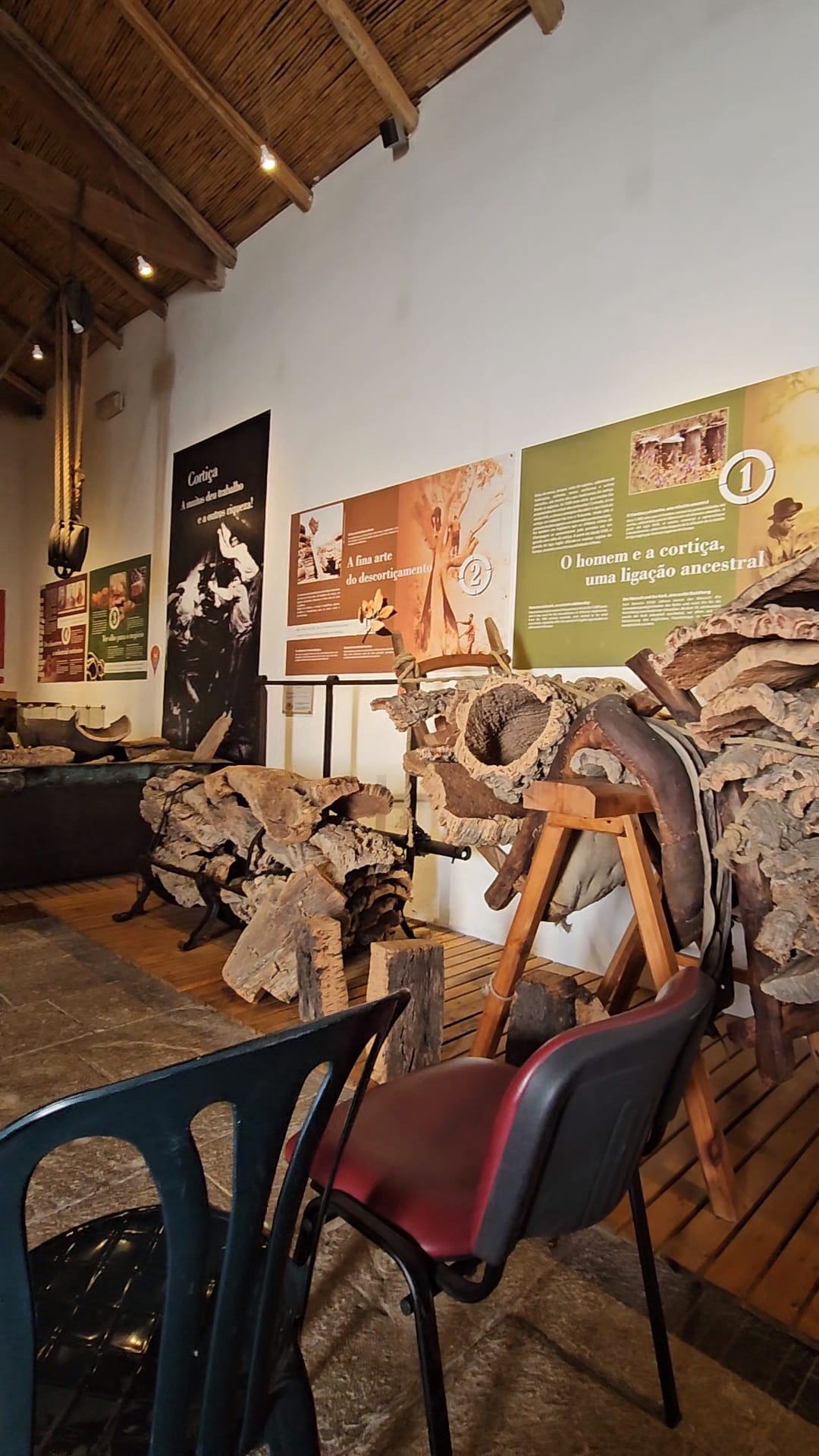
Did you know that Portugal is the world’s largest producer of cork? Portugal produces 60% of the volume of cork in the world. It is one of the largest industries in Portugal and has been for a very long time. It is a very versatile product and is ecologically sustainable.
Why Cork Is a Sustainable Resource
Each cork tree can be harvested multiple times during its lifespan. It takes about 30 years before the cork is usable, and then 9 years between each harvest. Each harvest can produce between 40-60kg (88-132 lbs.) Each cork tree can live up to 250 years old, so that is soooooo much cork!
What Makes Cork So Versatile
Cork is an amazing resource because, besides being sustainable, it is also lightweight, resistant to abrasion, fire retardant, can be used for sound and temperature insulation, and is naturally water resistant, and it is recyclable. All of these properties make it an excellent choice for a lot of different products. You can see many of these products in shops all over Portugal.
How Cork Is Harvested and Processed
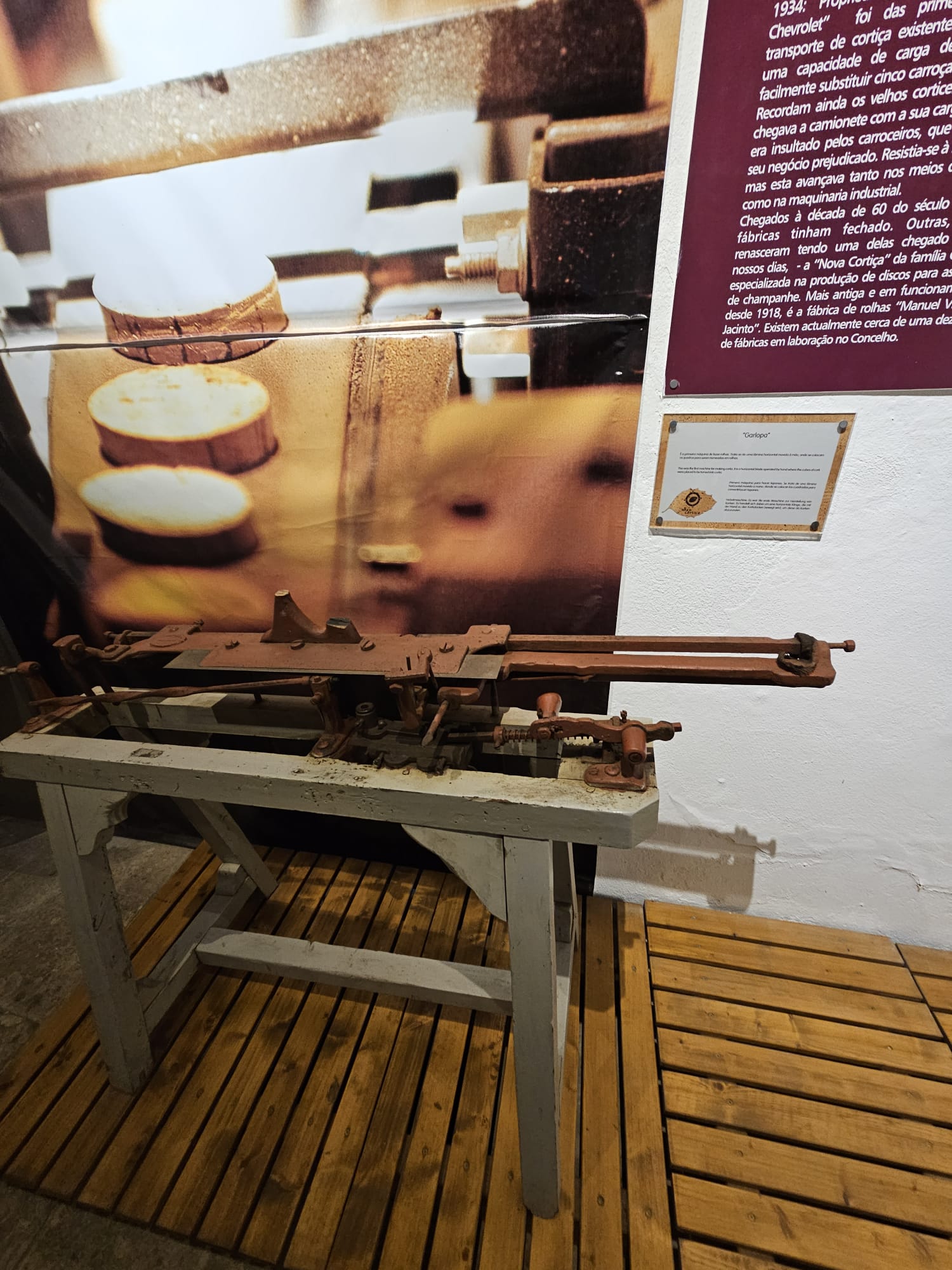
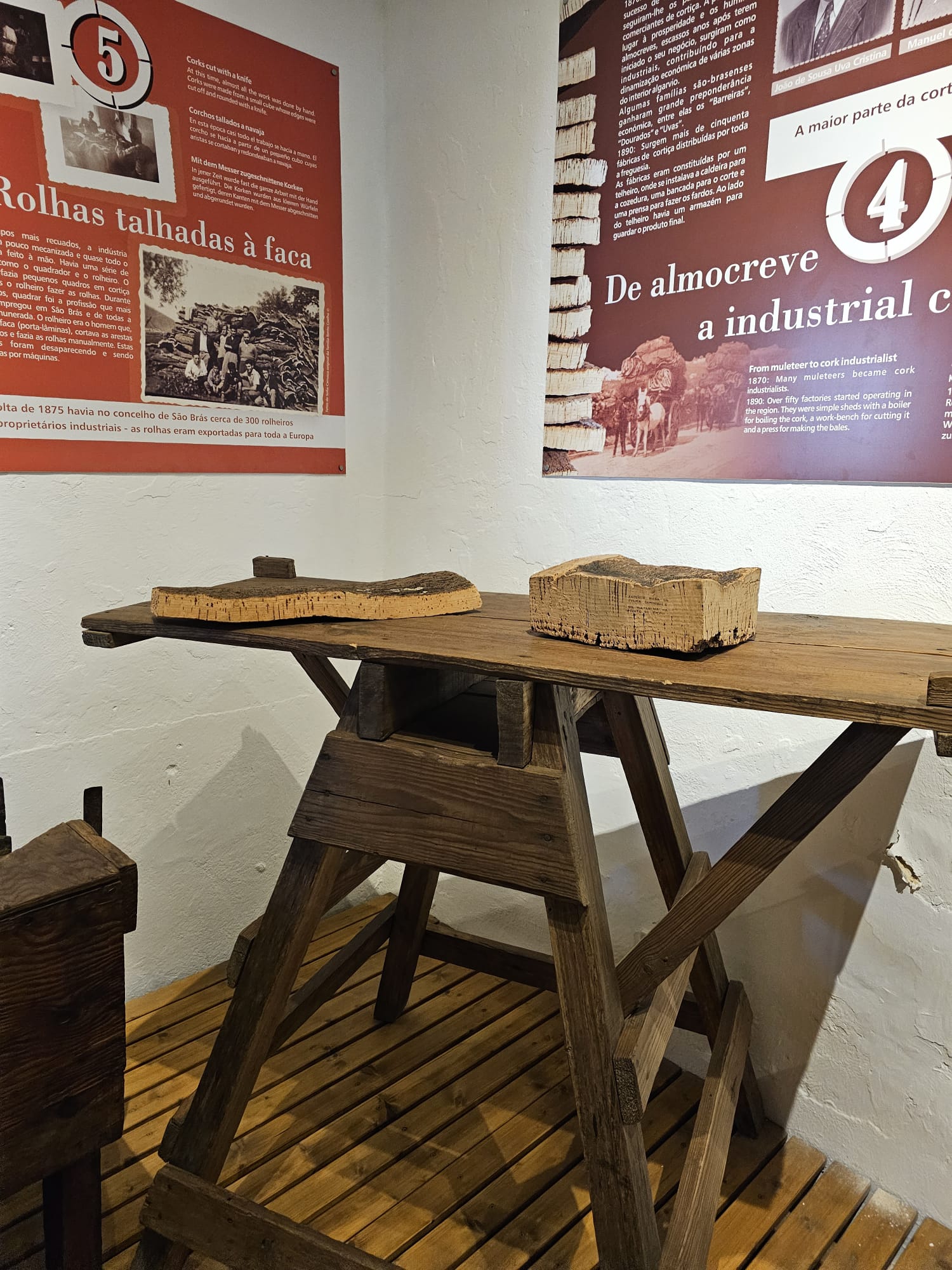
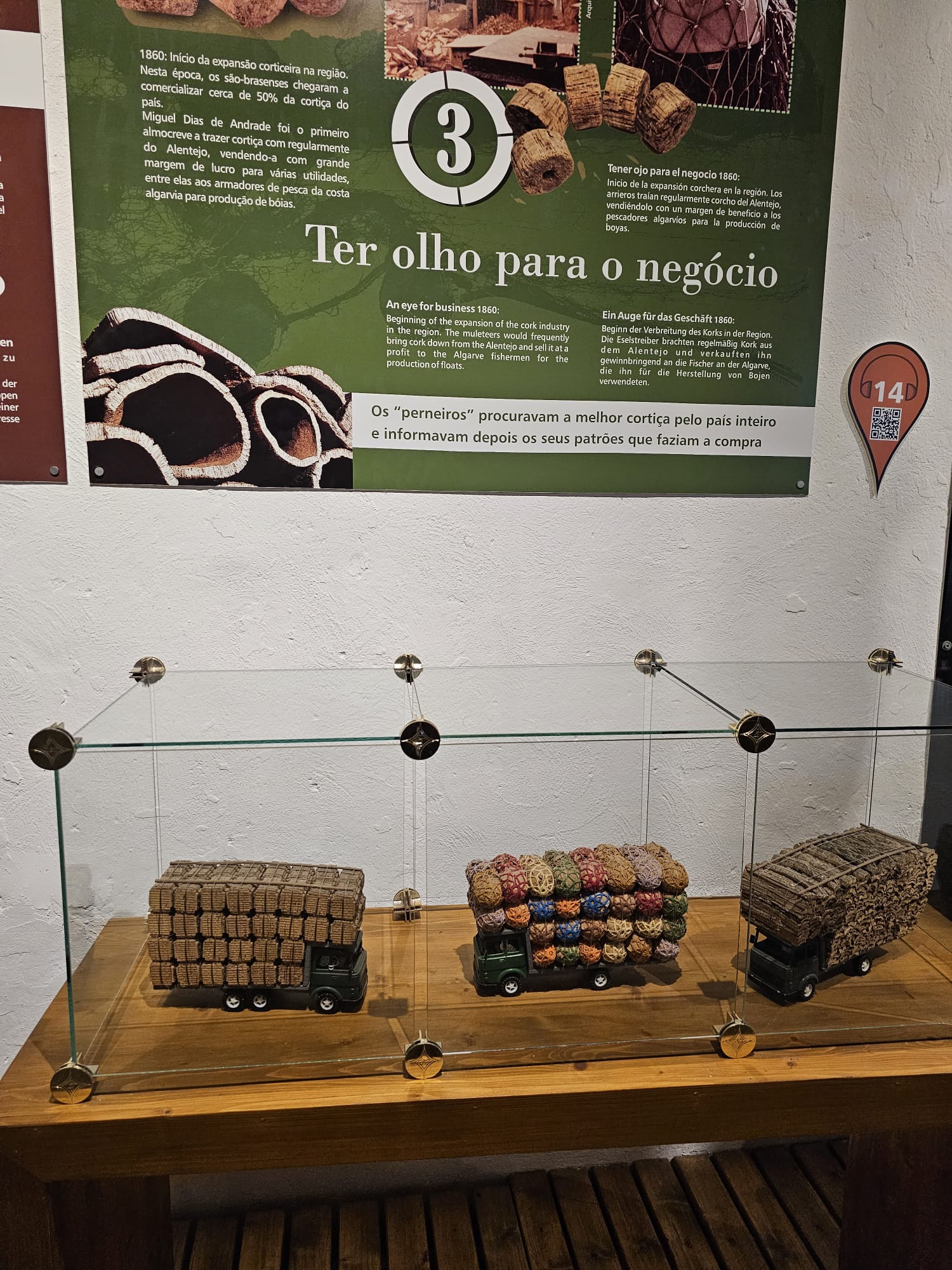
The cork exhibit began with a video that showed how cork is processed from the trees. It starts with cutting the bark off by hand with an ax. The people who do this are called descortiçadores. Then it is laid out to dry in the sun for several months. After that, it is boiled to kill any bacteria or bugs and to make it more pliable. It is then pressed and manually checked for mold and fungus. After all this, it is separated based on quality. Higher quality cork is used for wine bottles. The other is used to make a multitude of products, from tiles and building materials, furniture, soundproofing products, yoga mats, fashion, including clothing, and many other things.
Stepping Into Everyday Life in Early 1900s São Brás
The Kitchen
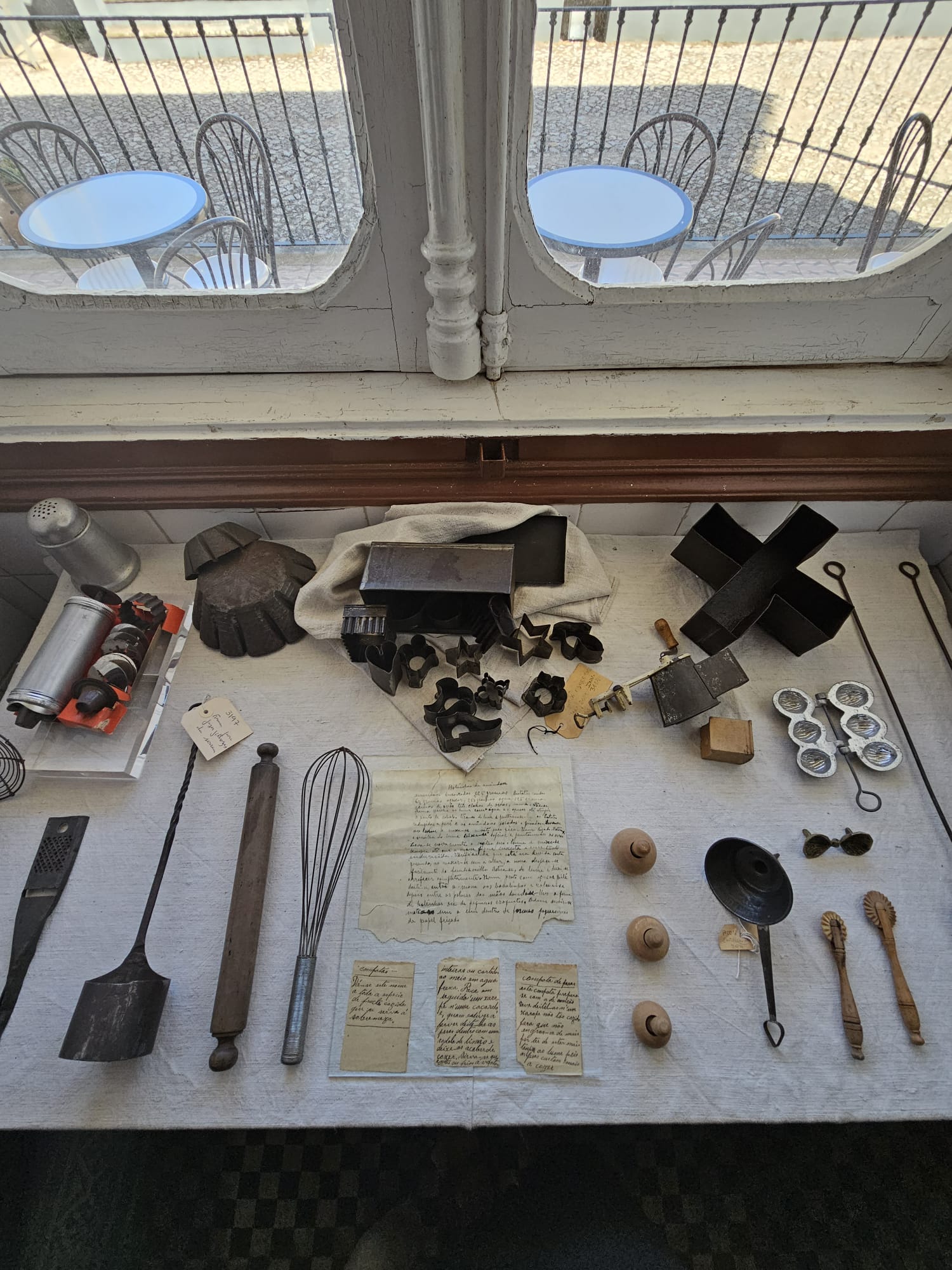
Following the cork exhibit was a look into what life was like in the area of São Brás de Alportel in the early 1900’s. It started with an old kitchen. It felt like you were stepping back in time. There were lots of baking tools laid out. I thought they were really cool because I went to Pastry school and love to bake. There were cookie cutters, molds, a whisk, a rolling pin, and much more.
The Garage
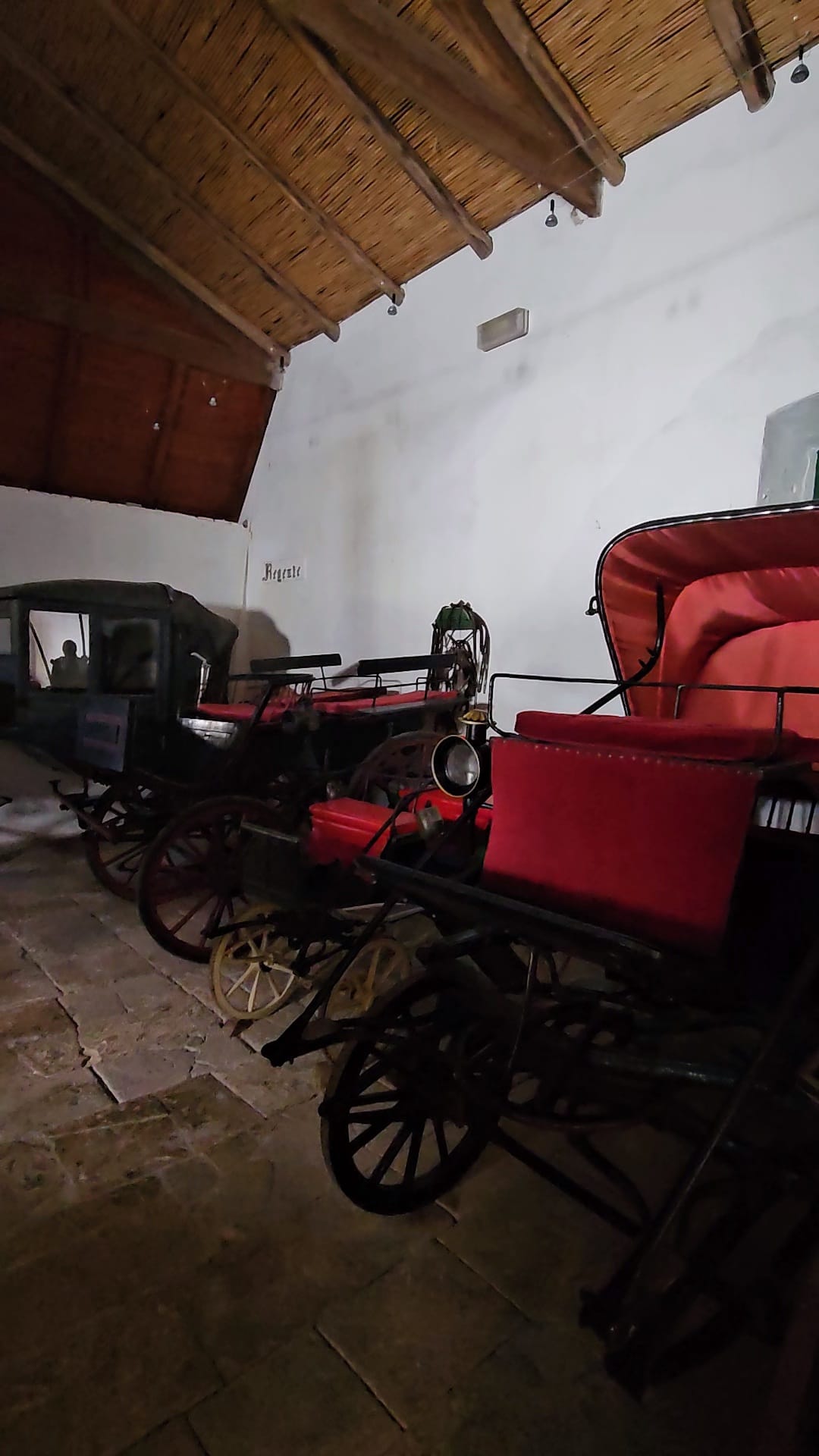
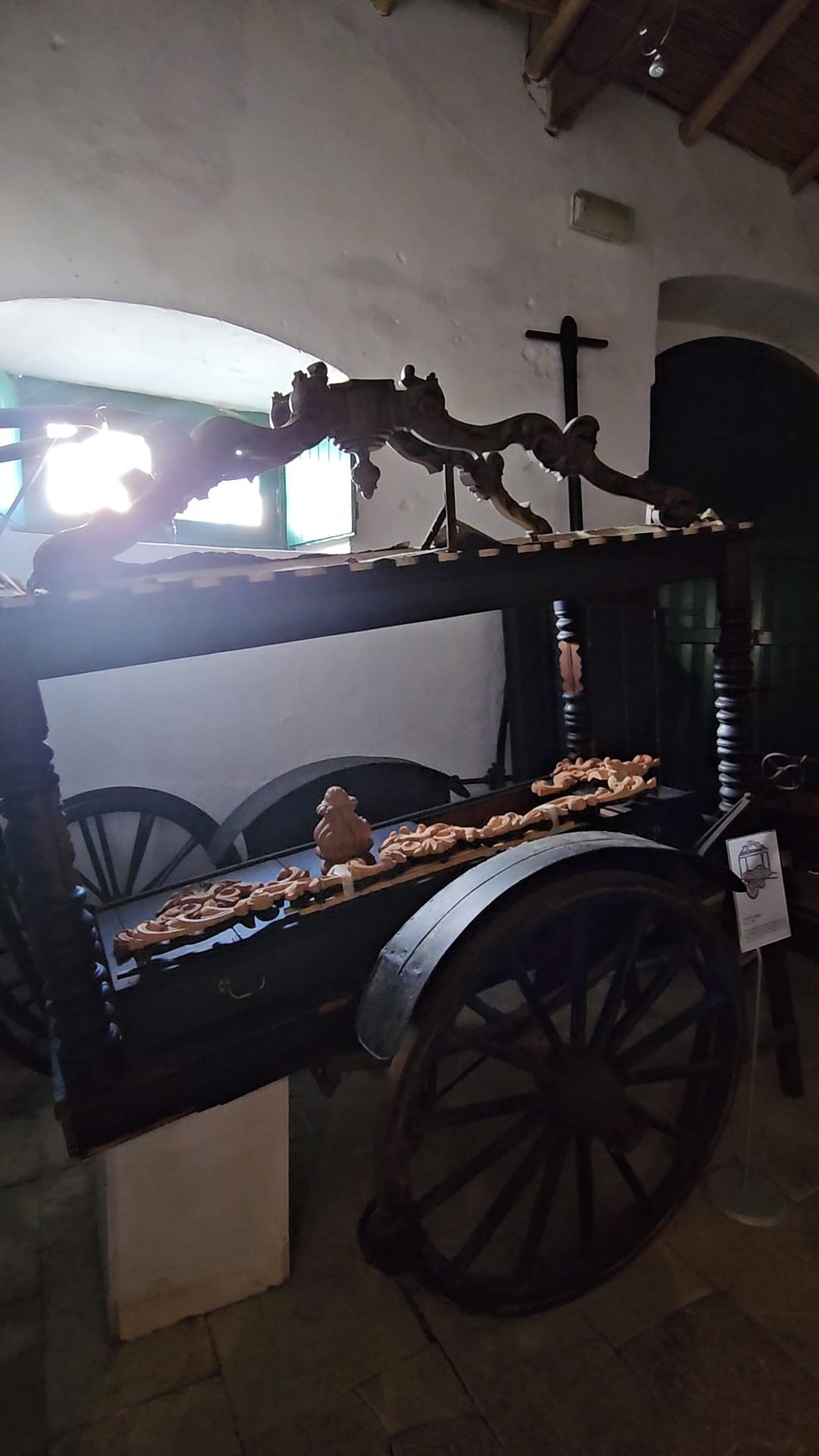
Next, there was a garage with some horse-drawn carriages (minus the horses). They were still in beautiful condition. There was even one that was a hearse. It was actually really pretty; it was wood with beautiful carvings. The garage went on to show tools and items that were used in agriculture, woodwork, ironwork, farming, and pretty much all types of labor that were common.
The Garden and Well
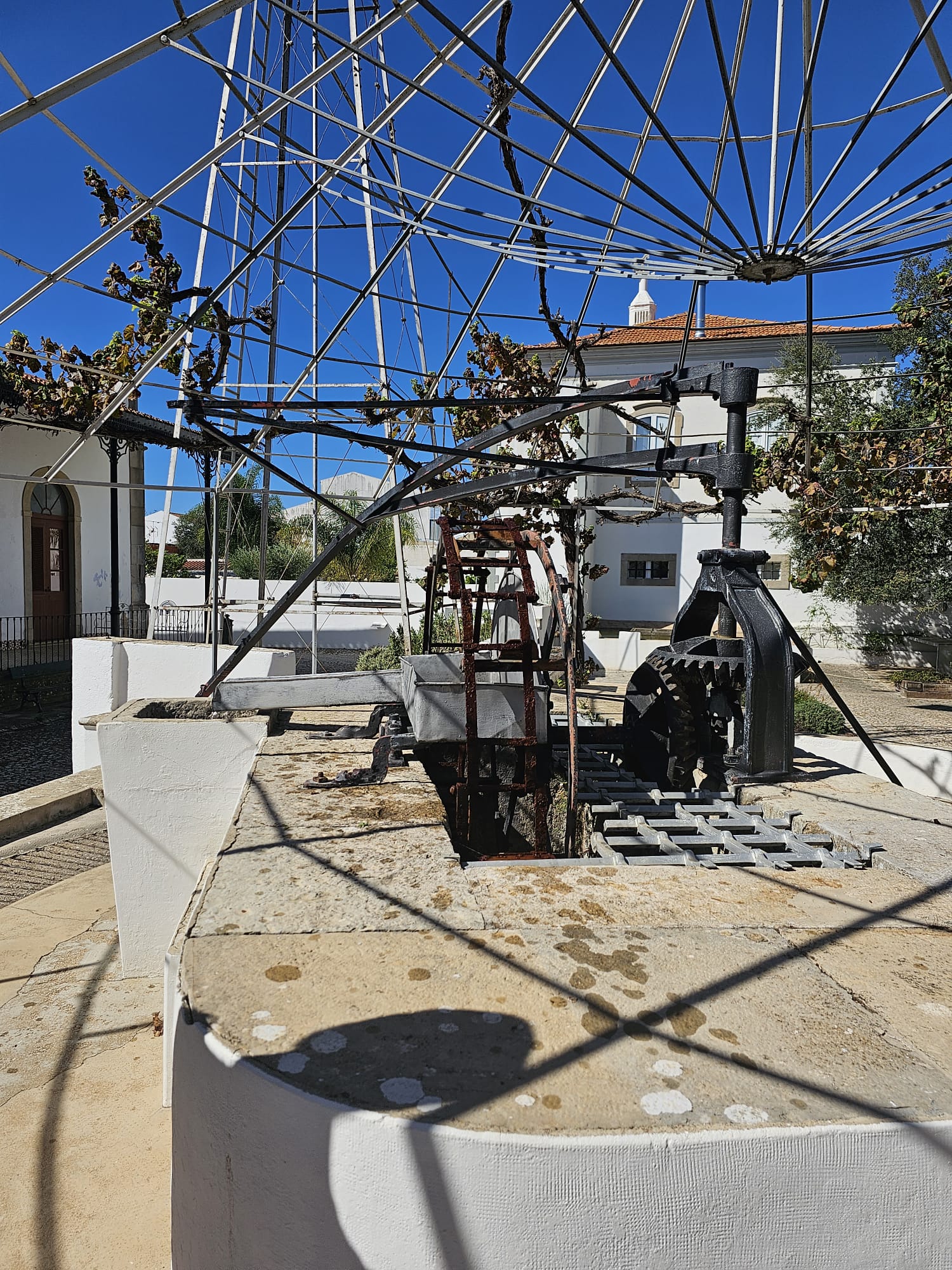
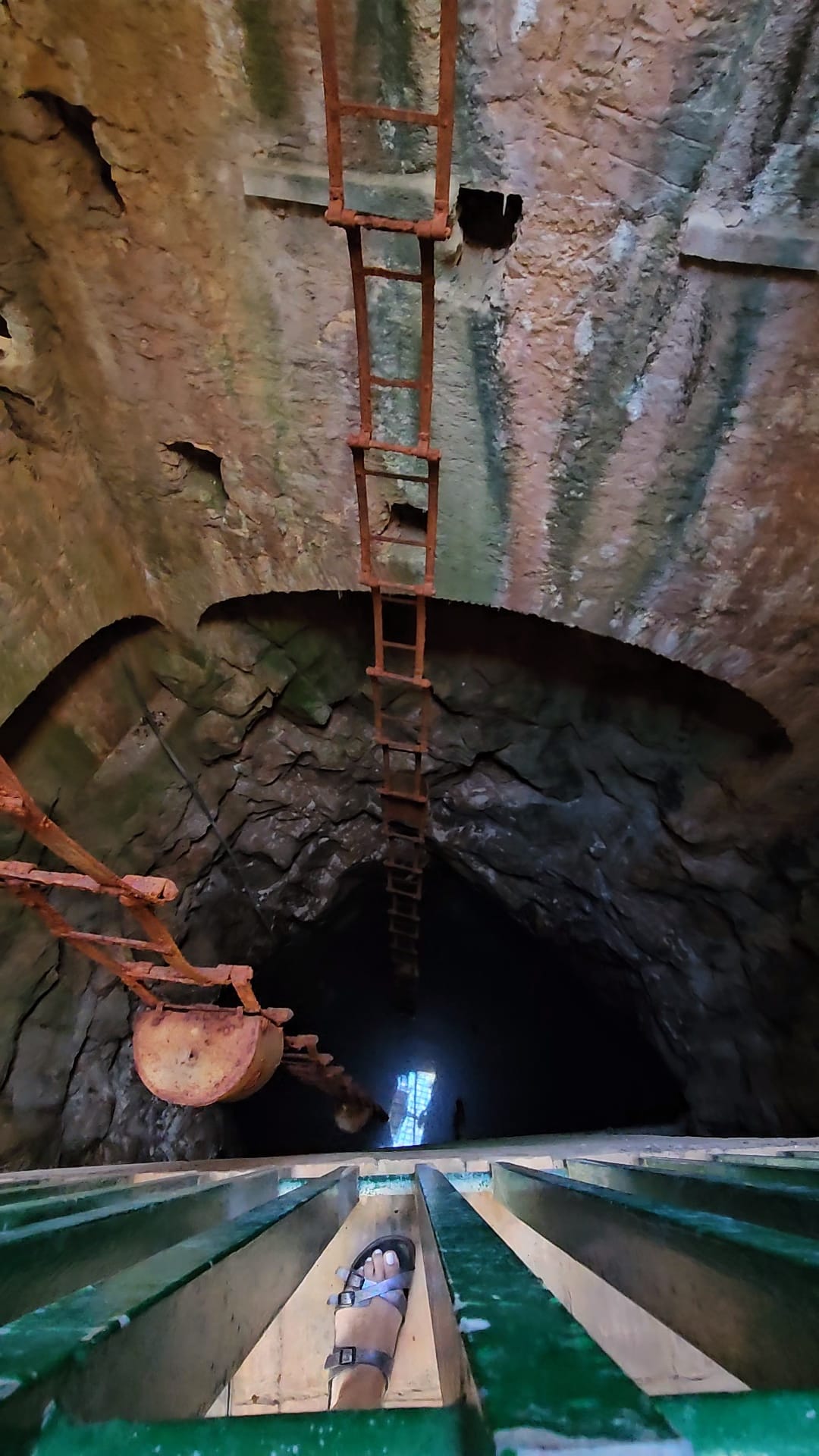
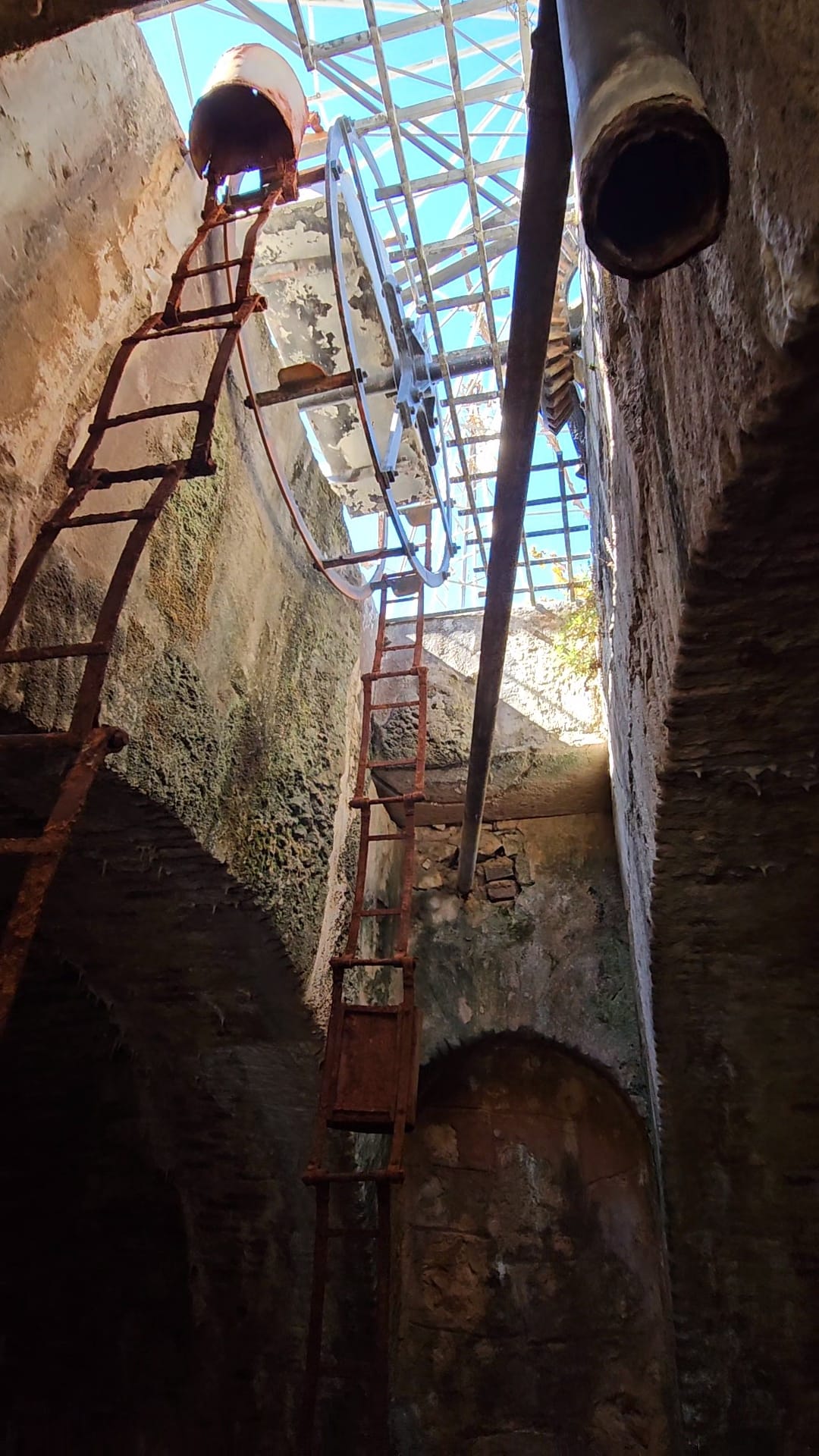
Outside was really nice. There were herb and flower gardens along with some stables that had more carriages. Then there was an old well. It was still operational. You could walk it to get water out and walk down inside of it.
Final Thoughts on Museu do Traje
Overall, the museum was surprisingly interesting. The fashion and costume section was a big highlight for me, along with the cork exhibit. I loved seeing how clothing styles evolved over time, and it paired perfectly with learning more about such an important Portuguese industry. I knew cork was a big deal here and had seen the trees everywhere, but I had no idea how it was harvested or how many different uses it has. Seeing the process and the final products made it even more fascinating. I’m really glad we stumbled across this museum in such a small town. It turned out to be a great way to spend a relaxed morning.
Because the museum is divided into different sections, it made sense to break the experience into two parts. There is a lot to take in, and each area tells a different piece of the story. This is an easy stop if you’re already in São Brás de Alportel or somewhere nearby and looking for something a little different to do.
If you enjoy local history, fashion, and Portuguese culture, this museum is definitely worth a visit.
Tips for Visiting Museu do Traje
- Plan about 1.5 to 2 hours if you want to see both the costume exhibits and the cork museum without rushing.
- Visit earlier in the day if possible. It is quieter in the morning and makes for a relaxed visit.
- Read the exhibit descriptions carefully. There is a lot of context and history that really adds to the experience.
- Wear comfortable shoes. You will be doing a fair amount of walking between the different sections.
- This museum pairs well with breakfast or lunch in São Brás de Alportel, making it an easy half-day outing.
- If you enjoy fashion, textiles, or traditional crafts, take your time in the costume section. It is one of the highlights.
- Even if you think cork sounds boring, do not skip that exhibit. It is surprisingly interesting and very Portuguese.
- Entrance to the museum is 2,50€ a person. Children under 12 are free
- There is an audio guide available in English
Continue Reading
For more about life in the Algavre check out these posts here
Follow Me
Check out my Instagram @Vegas.to.Portugal for more videos and pictures of the museum and more of my life in Portugal and adventures. And I’m on TikTok @expat.in.portugal where I share a more unfiltered look at my life 💙