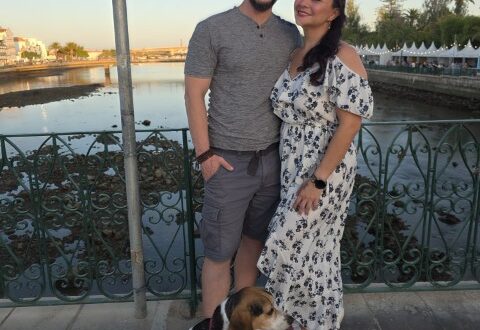
I grew up around Spanish. My family spoke it, I understood a good chunk of it, but somehow I never actually learned to speak it myself. So when I decided to move to Portugal, I figured I had a head start. Spanish and Portuguese are basically cousins, right?
Sort of. Turns out being able to understand a Romance language and being able to speak a different one are two very separate skills, and European Portuguese has its own personality that Spanish did not prepare me for.
I spent about 9 months before the move learning Portuguese on Memrise, slowly, in between packing boxes and spiraling about visa paperwork. Quick warning if you’re doing the same thing: Duolingo teaches Brazilian Portuguese, and European Portuguese is different enough that you’ll want to make sure whatever app or resource you’re using is actually teaching what people speak here.
None of this made me fluent. What it did was give me a small toolkit of European Portuguese phrases that made daily life so much easier, the ones that let you order food, ask for help, and not stand there panicking while someone waits for you to respond. That’s what this post is: the practical, no-fluff Portuguese I actually use to help you when you land in Portugal. These are the European Portuguese phrases for travelers and expats alike that actually got me through my first year here.
A Few Pronunciation Basics
Before we get into the phrases, a quick heads up on pronunciation, because Portuguese looks like it should sound like Spanish and then absolutely does not.
Nasal vowels are a whole thing. Any time you see ão, ãe, or a vowel with a til (~) over it, you’re supposed to push the sound through your nose a little. Think of the “on” in the French word “bon.” It feels ridiculous at first. Do it anyway.
“Ão” looks terrifying but isn’t. Words like não (no) or informação (information) show up constantly, and that little squiggle makes it look like a pronunciation trap. It’s really just a nasal “ow” sound. Say it out loud a few times, and it clicks fast.
“Lh” and “nh” are their own sounds, not two separate letters. Lh sounds like the “lli” in “million” (so “mulher,” meaning “woman,” sounds like “mool-yehr”). Nh sounds like the “ny” in “canyon” (so banho, meaning “bath”, sounds like bahn-yoh).
“S” changes depending on where it is in the word. At the end of a word or before certain consonants, s often sounds more like “sh.” So Português comes out closer to “por-too-GESH” than “por-too-GES.” This one trips up a lot of visitors, and it’s honestly one of the sounds that makes European Portuguese sound so different from Brazilian Portuguese.
You don’t need to master any of this before your trip. Just knowing these patterns exist means you’ll be able to make sense of the phrases below instead of guessing blindly.
Note:
The Portuguese language is very gendered. Unfortunately, there isn’t really an official option for Non-binary terms, although some people do have informal ways to say some things. Since there isn’t an official option, this post will use the gendered terms.
European Portuguese Phrases: Greetings and Basics
Greetings
In Portugal, you always start with a greeting, and it is dependent on the time of day.
- Ola- “Hello”
- Bom dia- “Good Morning”
- Boa tarde- “Good Afternoon”
- Boa noite- “Good night/evening”
- Tudo Bem? – “Is everything good?” (used like “how are you”)
Basics
- Por favor- “Please”
- Sim- “yes”
- Não- “no”
- Obrigado/obrigada- “Thank you” This is dependent on YOUR gender. If you are a woman, you say “Obrigada”; if you are a man, you say “Obrigado”
- Desculpe- “Sorry”
- Com licença- “Excuse me”
- Não falo português (muito bem)- “I don’t speak Portuguese (very well)”- the most useful phrase of your life 🤣
- Você fala inglês?- “Do you speak English”
- Muito prazer- literally translates to “great pleasure,” used like “nice to meet you”
Getting Around
Asking for directions
Onde fica…?- “Where is…?”. This is going to be your best friend, especially if you end up somewhere like Tavira, where the streets are narrow, charming, and completely uninterested in following a grid. Google Maps will get you close. Onde fica will get you the rest of the way.
A few more to pair with it:
- É perto? / É longe?- “Is it close?” / “Is it far?”
- À esquerda / à direita- “left” / “right”
- Em frente- “straight ahead”
Public transport and taxis
- Um bilhete, por favor- “A ticket, please”
- A qué horas parte/chega?- “What time does it leave/arrive?”
- Isto vai para…? – ”Does this go to…?”
- Posso pedir um táxi?- “Can I order a taxi?”
Paying for things
- Quanto custa?- “How much does it cost?”
- Posso pagar com cartão?- “Can I pay by card?”
- Aceita numerário?- “Do you accept cash?”
*Note: it’s a good idea to always have some euros (€) on you; not everywhere accepts cards.
Asking for help
- Preciso de ajuda- “I need help”
- Por favor, pode ajudar-me?- “Can you help me, please?”
- Desculpe, não percebi- “Sorry, I didn’t understand” — genuinely one of the most useful phrases for this whole section
At the Restaurant
Getting seated
- Uma mesa para dois, por favor- “A table for two, please” — swap “dois” for “um” (one), “três” (three), etc.
- Tem uma mesa disponível?- “Do you have an available table?”
Menu and ordering
- Posso ver o menu, por favor?- “Can I see the menu, please?”
- O que recomenda?- “What do you recommend?”
- Gostaria…- “I would like…”
Gluten-free/celiac phrases
This is the part I actually wish someone had handed me before I moved here.
- Sou celíaca, não posso comer glúten- “I’m celiac, I can’t eat gluten.”
- Tem opções sem glúten?- “Do you have gluten- free options?”
- Isto tem glúten?- “Does this have gluten?”
Drinks
- Um café, por favor- “A coffee, please” heads up, this gets you an espresso by default here, not a drip coffee
- Um copo de vinho tinto/branco- “A glass of red/white wine”
- Uma imperial- “a small draft beer” ( a very Portuguese thing to know)
- Uma garrafa de água, por favor – “a bottle of water, please” *note: water is not free, and you can choose between “com gas”- sparkling or “sem gas”- still.
- Com gelo- “with ice”
Wrapping up your meal
- A conta, por favor- “The check, please”
- Onde é a casa de banho?- “Where is the bathroom?”
- Estava delicioso- “It was delicious” — nice one to leave a place with
Emergency Phrases
Hopefully you never need these, but having them ready (even just as a screenshot on your phone) can make a stressful moment slightly less awful.
Medical
- Preciso de um médico- “I need a doctor.”
- Chame uma ambulância- “Call an ambulance.”
- É uma emergência- “It’s an emergency.”
- Tenho uma alergia a…- “I have an allergy to…”
Police/safety
- Chame a polícia- “Call the police”
- Perdi o meu passaporte- “I lost my passport.”
- Fui roubado/roubada- “I was robbed” — roubado if you’re male, roubada if you’re female, same pattern as obrigado/obrigada
General Help
- Ajuda!- “Help!”
- Não me sinto bem- “I don’t feel well”
- Preciso de ajuda, por favor- “I need help, please”
If you are having an emergency, the emergency phone number is 112
Everyday Expat Phrases (No Phrasebook Teaches You These)
This is the section I actually wish existed before I moved here. Tourist phrasebooks cover restaurants and hotels, but nobody prepares you for the small, constant interactions of actually living somewhere.
At the mercado
- Tem…?- “Do you have…?”
- O que é isto?- “What is this” useful for products that you have never seen before
- Pode pesar isto?- “Can you weigh this?” A lot of Portuguese markets still weigh produce separately, so this one comes up more than you’d think
- É fresco?- “Is it fresh?”
At the farmácia
- Preciso de algo para… – “I need something for…”
- Isto precisa de receita?- “Does this need a prescription?”
Dealing with your landlord
- A torneira está a pingar- “The faucet is dripping”
- Não há água quente- “There’s no hot water.”
- Pode vir consertar…?- “Can you come fix…?”
- O wifi não está a funcionar- “The wifi isn’t working”
Bureaucracy and admin life
- Preciso de marcar uma consulta- “I need to book an appointment.”
- Tenho uma marcação- “I have an appointment”
- Onde fica a Junta de Freguesia? “Where’s the local parish council office?” Tourists never need this phrase; expats need it constantly
Small talk and neighbor stuff
- Sou novo/nova aqui- “I’m new here”— novo if male, nova if female
- Há quanto tempo mora aqui?- “How long have you lived here?”
- Sou de…- “I am from…” — swap in your country or city; this one comes up in almost every casual conversation you’ll have
- Está muito calor hoje- “It’s very hot outside” a very Portuguese small talk topic, especially in the summer
- O meu nome é…- “my name is…”
- Qual é o seu nome?- “What is your name?” — that’s the polite/formal version, which is generally the safer default with strangers in Portugal.
- If you want something more casual (like with someone your age or a new friend), you’d hear “Como te chamas?”- (literally “what do you call yourself”), with “Chamo-me…” as the reply, meaning “my name is…” Just know that one’s more informal, so it depends on who you’re talking to.
- Não faz mal- “it doesn’t matter” used like “don’t worry about it”
Saying goodbye like a local
- Até já- “See you soon” used when you’ll see someone again very shortly
- Até logo- “See you later” for later the same day or just a general “see you around”
- Adeus- “Goodbye”
My European Portuguese Journey
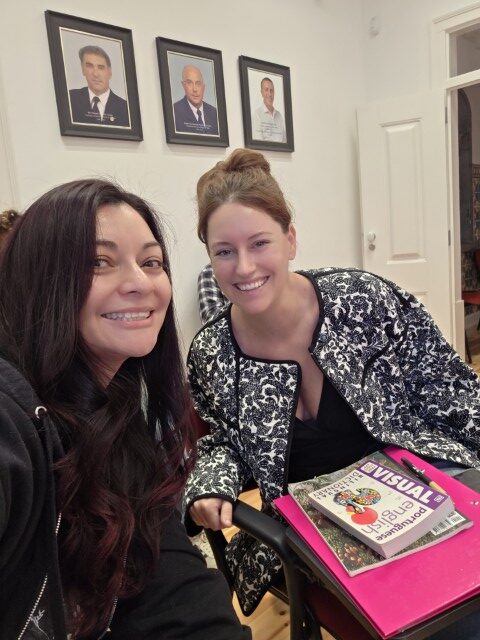
Since moving here, I have taken a couple of Portuguese classes, and I’m still nowhere near fluent. I probably say “desculpe, não percebi” more times a week than I’d like to admit. But these phrases got me through moving my entire life from Las Vegas to a small town in Portugal, and they’re the ones I actually use, not just the ones that sound good in a phrasebook. Portuguese is a very hard language to learn, so don’t worry if it takes you a while. I’m almost 4 years in, and I still have a long way to go.
If you’re visiting, moving, or just daydreaming about either one, save this post for later. And if you’ve got a European Portuguese phrase you swear by that I missed, drop it in the comments; I’m always adding to my own list.
Read More
For more about what life is like living in the Algarve, check out these posts here.
Follow Me
Follow me on social media. I am on Instagram @vegas.to.portugal and TikTok @expat.in.portugal. I share more about my daily life as an American living in Portugal, life with ADHD, my gluten-free adventures, and more! 💙