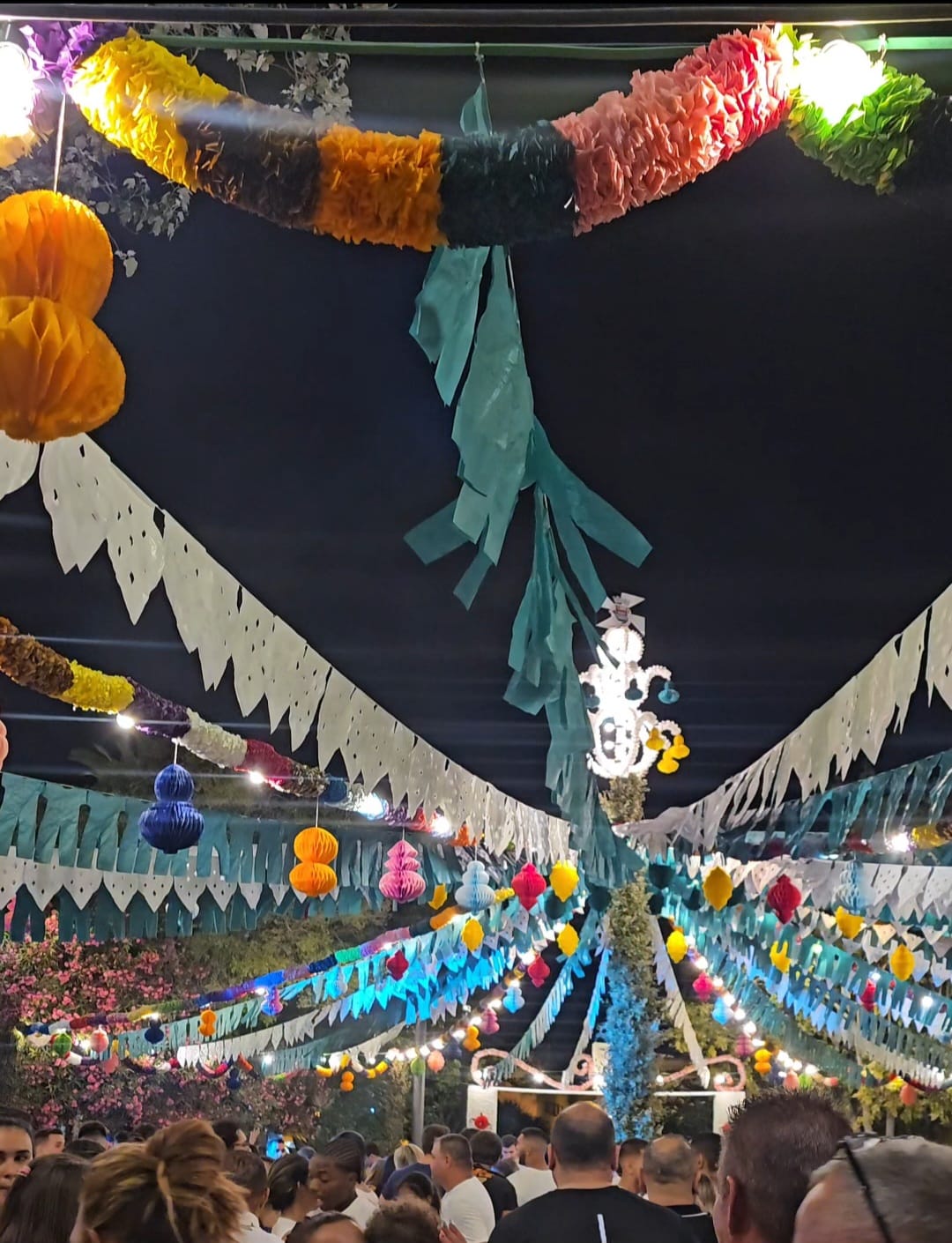
June in Portugal is a special experience. School is out for the kids, the temperature rises, visitors come from all over the world, and Santos Populares begins. Santos Populares in Portugal, or Popular Saints, is a huge celebration all over the country throughout the month of June. Every city, town, and village throws big street parties where people come together to celebrate and dance under the brightly colored decorations. Some places even have spectacular fireworks shows! Coming from Las Vegas, I thought I knew a thing or two about parties, and then Portugal handed me a ginjinha, grabbed my hand, and pulled me into the street to dance with strangers.
What is Santos Populares
Santos Populares isn’t just a one-day or one-weekend holiday throughout the country. There are a number of festivals throughout the month, and each city has its own Patron Saint that they celebrate.
The History of Santos Populares
Santos Populares was actually originally a Pagan summer solstice festival that honored fertility and the harvest. It was then adapted by the Catholic church to honor and celebrate 3 Saints throughout the month:
Santo Antonio (Saint Anthony) -June 12 to 13
São João (Saint John) – June 23-24
São Pedro (Saint Peter)- June 28-29
Each City Celebrates Differently
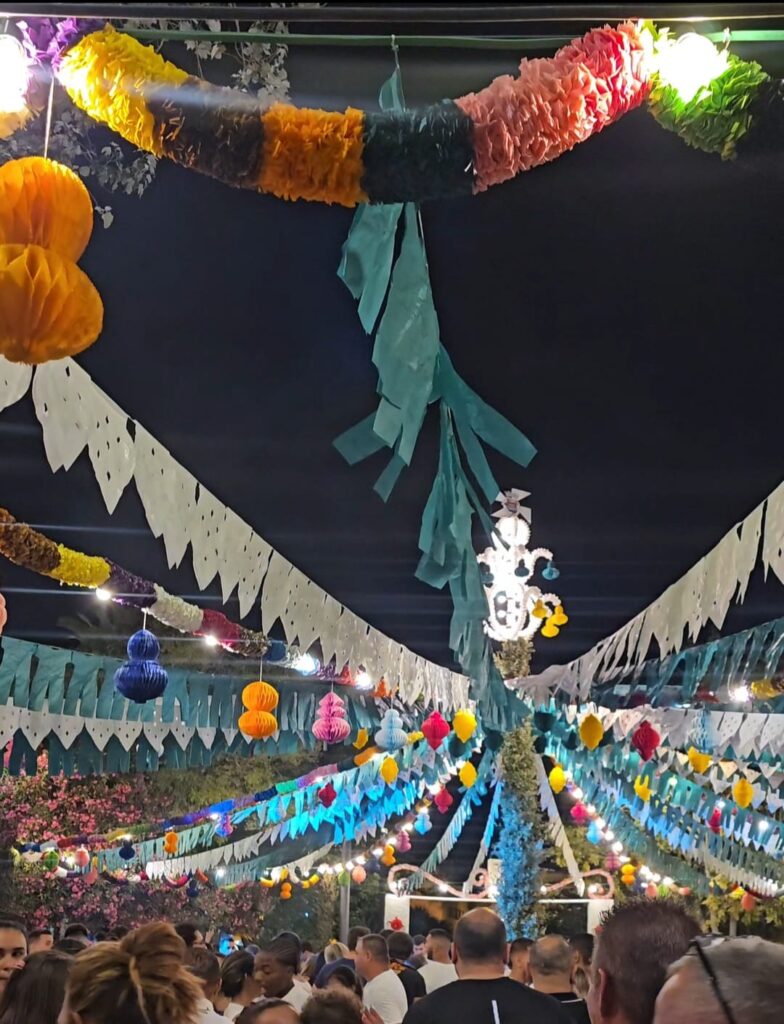
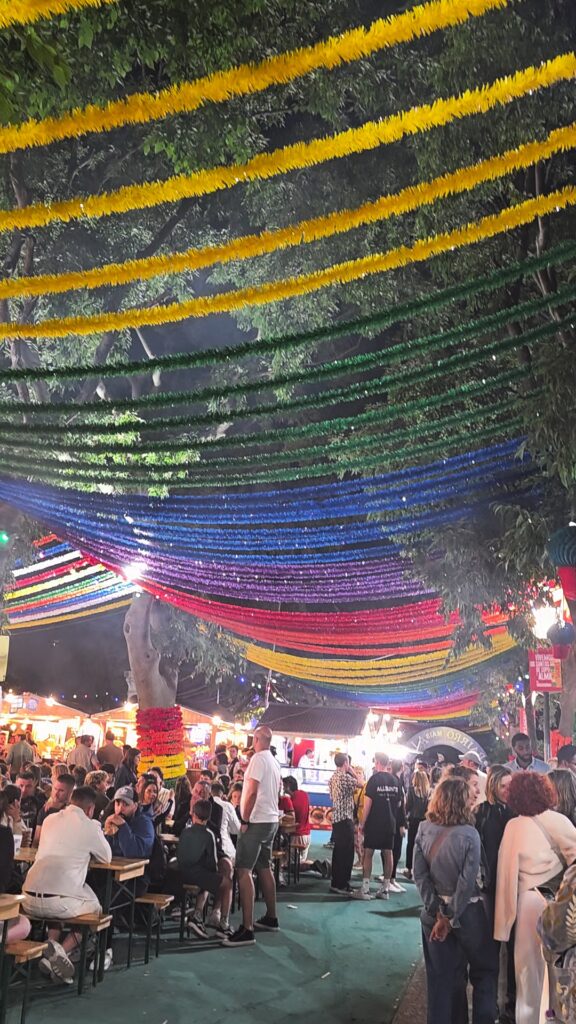
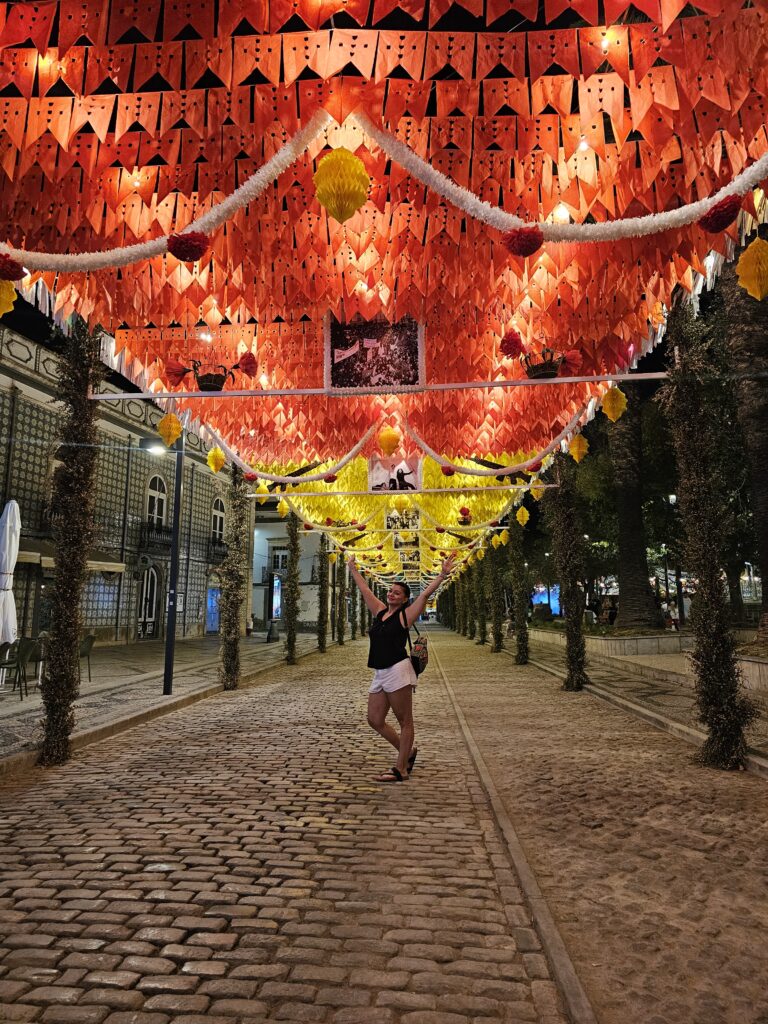
Each city celebrates the saint days differently, but there are commonalities between them. You will most likely see the towns or festival areas decorated with brightly colored flowers and streamers. You will also likely see rosemary spread out all over the ground. Walking on rosemary serves both a practical and spiritual purpose. As the crowds trample the herbs, they release a fresh, sweet fragrance that cuts through the heavy smoke of grilling sardines. Deeply rooted in Portuguese folklore, this aromatic tradition is also believed to ward off bad luck and envy while honoring Saint Anthony, the patron saint of matchmaking, by symbolizing love and loyalty.
Santo Antonio – The Matchmaker Saint
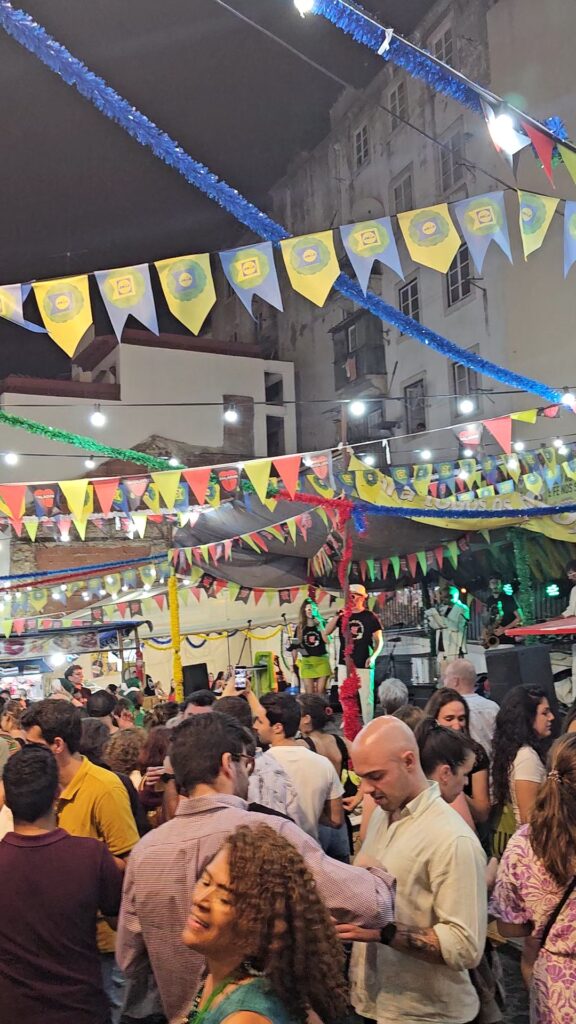
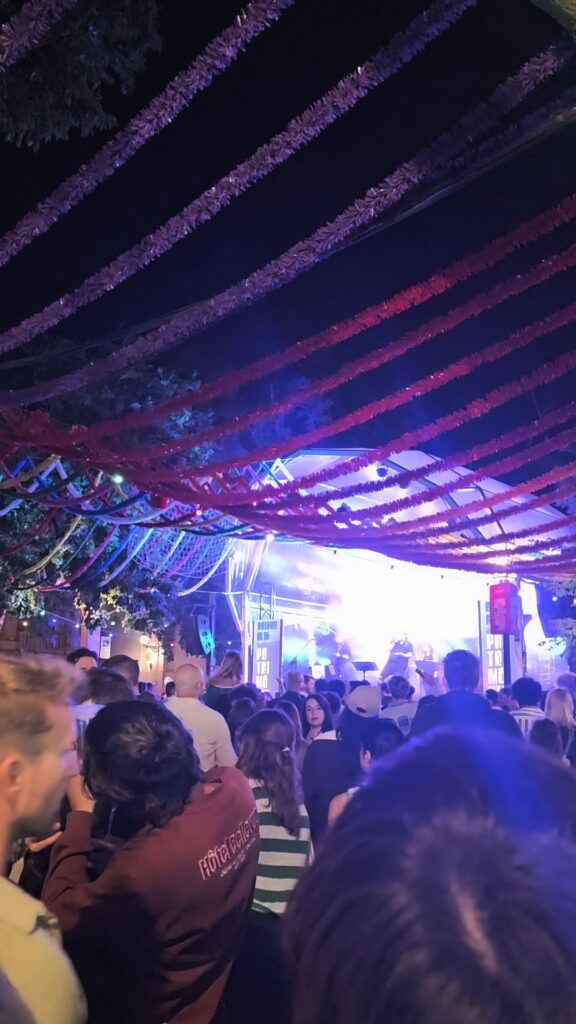
Lisbon celebrates Santo Antonio with multiple parties throughout the city. They are usually tucked away in neighborhoods or parks, but don’t think that means they are small. They are big parties with tons of people dancing in the small streets to local bands that play a variety of music, from popular songs to traditional Portuguese music. There will be food trucks and lots of drinks. My favorite ones are the Bairro Alto festival and the one at the Miradouro de São Pedro de Alcântara, which is also a great spot to watch the sunset. There are many more, though, over 40 throughout the city.
São João- The Festive Saint
The biggest São João festival is in Porto. I have yet to be able to experience it in person, but I want to go next year because it’s supposed to be one of the best. They have a fun tradition of hitting each other with squeaky hammers. When it gets dark, they then release paper lanterns into the sky, and then there is a massive fireworks show off the Dom Luís I Bridge. It looks absolutely incredible, and I can’t wait to experience it.
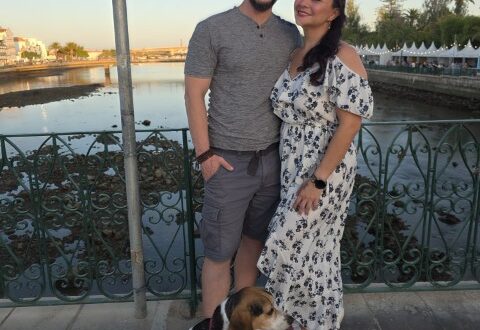
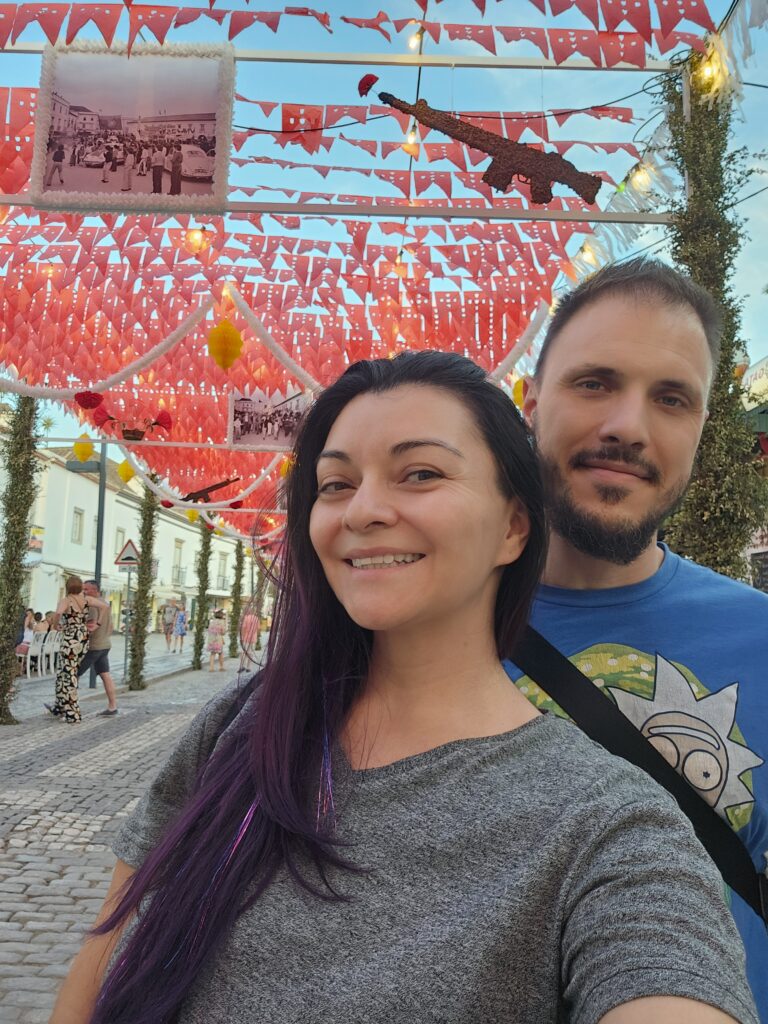
Tavira, where I live, celebrates Santo António a bit, but the biggest party is for São João because June 24 is also the Municipal city day (Dia da Cidade). There are street parties, and this year a pyromusical show off the Roman Bridge.
São Pedro- The Fisherman’s Saint
São Pedro is celebrated in fishing towns throughout Portugal. There are São Pedro festivals in Faro, Sintra, Vila Nova de Gaia, and many more. São Pedro is apparently a bit more of a serious saint, compared to the other two. The main tradition of São Pedro is the blessing of the fishing boats. Many places have traditional dances with traditional dress. There are festivals for São Pedro, but they aren’t as big or as popular as Santo Antonio or São João.
THE FESTIVITIES
Whether you find yourself in Lisbon, Porto, or a small town like Tavira, Santos Populares has a feeling that’s hard to mistake. The streets get strung with brightly colored paper decorations and streamers, and the roads are covered in rosemary. The smell of grilled sardines fills the air, the music takes over the city, and you grab a shot of Ginja and a cup of sangria and dance in the streets until all hours of the night. It’s a feeling of happiness that floats through the air with everyone enjoying themselves. And as an American, it’s a wonderful feeling to experience a festival like this without even a hint of anxiety that something dangerous will happen.
Food is a big part of the celebrations. Sardines are the main offering, grilled right on the street and served on a piece of bread. If you have celiac disease, as I do, the sardines themselves are naturally gluten-free, but watch out for cross-contamination at busy street grills and always ask about the bread. If a place sells fries, they often have a separate fryer; always ask. There are usually other options too, chouriço, bifanas (not if you can’t have gluten), and plenty of snacks to keep you going through a long night of festivities.
Music is everywhere. Depending on where you are, you might hear traditional Portuguese folk music, popular hits, or live bands covering everything in between. In some towns, Lisbon and Quarteira, for example, have Marchas Populares, a big parade competition where each bairro performs choreographed routines in elaborate costumes. It’s a really cool thing to watch. Each group clearly puts so much effort and pride into their performance.

THE WEDDINGS OF SANTO ANTÓNIO
In 1958, the Lisbon City Council and a popular newspaper (Diário Popular) launched the tradition of the weddings of Santo António as a way to help couples who couldn’t afford a wedding. Every year, 16 couples from the Lisbon area are chosen to participate in this tradition. Many local businesses sponsor the weddings, and EVERYTHING is paid for, even the honeymoon. The couples can choose a civil wedding or a Catholic ceremony, and then they all ride in a parade. It’s a huge celebration, and it is even broadcast throughout the country. So far, over 400 couples have been married through this tradition. Since Santo António is considered the matchmaker saint and the patron saint of love and marriage, it ties in perfectly for a huge wedding celebration.
My Personal Experience for Santos Populares
I love Santos Populares! I have celebrated it in Lisbon twice, Tavira, Faro, and experienced the Marchas Populares in Quarteira. Every time, it has been such a fun experience. It’s so amazing to see how much the country embraces these traditions. From the gorgeous decorations all over the towns to the elaborate costumes and choreography for the Marches Populares. The best part is the energy. The energy that you feel while dancing in the streets is electrifying. Just enjoying life with friends and strangers who are all celebrating the beauty of Portugal, it truly is a magical experience.
Practical Tips For Visitors
If you are planning to visit Portugal in June, timing and location matter. Here is what I would tell a friend:
Get there early or stay late. The parties don’t really get going until the evening, and they run well into the night. If you show up at 7 pm, you will basically be alone. If you show up at 10 pm, you will wonder where all these people came from.
Wear comfortable shoes. You will be walking on cobblestones, standing for long periods, and possibly dancing whether you planned to or not. This is not the time for cute but painful sandals. Ask me how I know.
For the celiac and gluten-sensitive crowd. Sardines and chouriço are naturally gluten-free, but street grills are busy, and cross-contamination is real. Bifanas are pork sandwiches on bread, so skip those. When in doubt, ask. Portuguese people are generally very helpful and patient. Bring a snack just in case, because festival food options can be limited.
Lisbon for Santo António, Porto for São João. If you can only pick one city and one festival, those are your two best bets. Lisbon from June 12th to 13th for the Marchas Populares and neighborhood parties. Porto from June 23rd to 24th for the lanterns, the hammers, and the fireworks off the Dom Luís I Bridge.
Don’t skip the smaller towns. Places like Tavira have a completely different energy, more local, less crowded, and honestly, really special. You get to feel like a participant instead of a tourist.
Say yes to things. Someone will offer you ginjinha from a plastic cup in an alley. A stranger will grab your hand to dance. A grandmother will try to feed you something. Just go with it. That’s kind of the whole point.
This Is Why We Moved Here
There is something about Santos Populares that is hard to explain to someone who hasn’t experienced it; it’s loud and crowded and smoky, and somehow the most community I have felt in years. I have been to concerts, festivals, Vegas clubs, and New Year’s Eve on the Strip. Nothing has felt quite like this. We didn’t move here for the specific Santos Populares festivals, but we did move here to experience a different kind of lifestyle and a different culture. We moved here to feel safe and for a better quality of life, and every year, Santos Populares is another reminder of how happy I am that we made this decision.
Read More
Portugal is full of festivals, and it seems like there is always something going on. To read about the ones in the Algarve, check out these posts here.
Follow Me
To see more content about Santos Populares, watch this reel, and to see more of my adventures and my regular, day-to-day life, follow me on my socials. TikTok @expat.in.portugal and Instagram @vegas.to.portugal