
Picture this: I’m standing in front of a door in Portugal, pushing with my whole body. The door is not moving, and I’m trying so hard. The sign on it says “puxe.” Someone walks over and pulls it, and I feel like a total idiot. Guess what? In Portuguese, “puxe” means pull. Unfortunately, I have lost this fight with doors more times than I’d like to admit, and it was my first clue that I was a little naive about this whole move.
I had never even visited Portugal before moving here, and I didn’t know much about it. I had done some research, but you can only learn so much from YouTube and Facebook groups. Now, after 4 years of living here, I’ve put together a list of the things I wish I’d known before I moved to Portugal. They might save you some stress (and some door-related dignity).
If you want to know more about what living in Portugal is like, you can book a call with me and ask any questions you may have about what life in Portugal is really like.
10 things to know before moving to Portugal
1. Finding friends won’t be hard
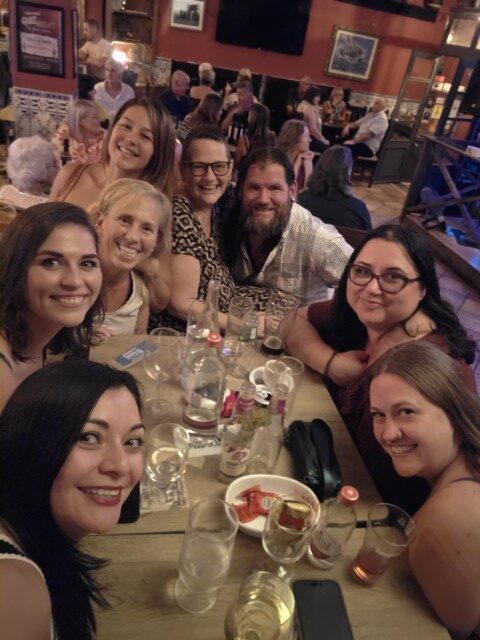
If you have read any of my previous posts, you might know that my biggest fear of moving to a new country wasn’t the language or the culture; it was 100% whether I would find friends. If you saw me at a social event today, you would never have guessed that. I know sooooo many people, and I have such an amazing community here in Tavira.
So how did I meet friends? I put myself out there, which was really freakiing hard. I actually have pretty bad social anxiety, and I am extremely shy. But I knew that if I wanted to meet anyone, I was going to have to push past my fears and put myself out there. I joined expat groups on Facebook and went to meet-ups.
10 days after moving here, I went to my first expat meetup. It was a women’s-only event, so I had to go alone. The amount of anxiety I had that day was insane; I almost turned around and went back numerous times. But I told myself I’d be disappointed and sad if I didn’t go. That day I met multiple women, and guess what? I’m still friends with them! I continued meeting people, and now I go to so many social events. I practically meet new people every time I leave my house.
2. Don’t bother bringing the heels
I had actually read about how heels aren’t a big thing here because of the cobblestone streets. But I figured maybe I’ll pack some just in case. So I brought a pair of heels, a pair of wedges, and a couple of pairs of heeled boots. I have worn one pair of heeled boots, I think, 1 time. They basically just took up space on my pallet and now take up space in my shoe holder. Also, if I ever needed heels, there are shoe stores here. I could have easily gone to buy a pair. So save the space and leave them behind. And honestly, after years and years of wearing crazy high heels, I’m glad to live in flats!
3. Renting furnished usually has everything
When we signed our lease, the realtor told us it was furnished, which was great because we wouldn’t have to buy furniture. What I didn’t realize was that furnished actually means that pretty much everything you need is in the place. The kitchen was fully stocked with utensils and stuff. There was very little that we actually needed to get. When we bought our apartment, it was also furnished and had so much stuff in it. So before you move in, ask for an itemized list of what’s already there. It can save you a lot of space and headaches of trying to figure out what you will need to bring, and if you don’t bring it, you can absolutely find it here.
4. Food is healthier, and eating gluten-free isn’t hard, but you might have to give up some of your faves
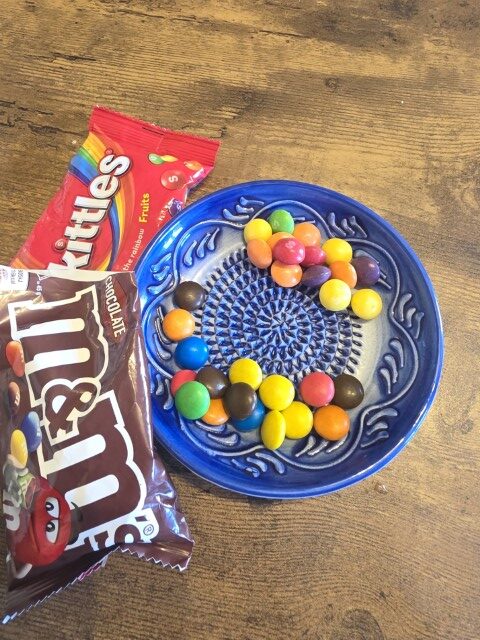
Europe has a lot more restrictions and standards for the food that is sold here. Ingredient labels are much smaller here, and you can pronounce most of what’s on the label. The food is much healthier, and there are fewer chemicals. It really makes you wonder why all the stuff is allowed in the U.S., because we still have a lot of the same items; they are just better. For example, you can get M&Ms and Skittles, but they look slightly different because they don’t have artificial dyes. Because of the restrictions, everything is a lot healthier. But it also means that some of your favorite snacks might not be available.
At restaurants, you will also notice a difference. Portions here are good but not as huge as we are used to in the US. And things are fresh. The produce and fish on your plate came from the market, and the meat came from the butcher. And you won’t be rushed through any of it (more on that in #7). You leave the restaurant feeling content and satisfied rather than overstuffed from the giant portions you were rushed to scarf down so they could turn the table for the next people.
Gluten-free and allergens
Good news for my fellow gluten-free folks: eating gluten-free here is very doable. Every grocery store has gluten-free items (some have more than others), and allergens are bolded on ingredient labels, so they’re easy to scan. Many restaurants mark gluten-free options on the menu, and a lot of Portuguese food is naturally gluten-free. Just talk to your server about what you need, especially around shared fryers and sauces. Here’s the line that does the heavy lifting: “Sou celíaca e não posso comer glúten.” (I’m celiac and I can’t eat gluten.) If you’re not celiac, you can swap in “Não posso comer glúten” or ask “Isto tem glúten?” (Does this have gluten?) I’ve got a whole post on my favorite gluten-free restaurants in Tavira if you want a head start.
5. Portuguese is a hard language!
I started trying to learn Portuguese before I moved here; I used the Memrise app for a while and started watching YouTube videos to try and learn. I have taken a couple of classes in the 4 years I have been here. Even then, I am nowhere near fluent. I can get by at a restaurant and even at the health center, but I still struggle a lot. It’s a very hard language to learn; even my Portuguese friends say it’s hard, but I’m still trying. Hopefully one day I’ll be fluent, not just getting by.
Besides classes, I’ve done a few things to help me learn: watching kids’ shows on TV, reading magazines I used to read in English, and watching things that interest me on YouTube in Portuguese. I watch a lot of lifestyle content because it’s full of everyday stuff like cooking and shopping, things I use in my day-to-day life. It has helped so much! Also, with the social anxiety I mentioned earlier, I’m forcing myself to speak Portuguese when I’m in town, even when I feel shy. That gets tricky, though, because so many people speak English that they automatically switch to English when they hear me, but I do try to speak as much of it as I can.
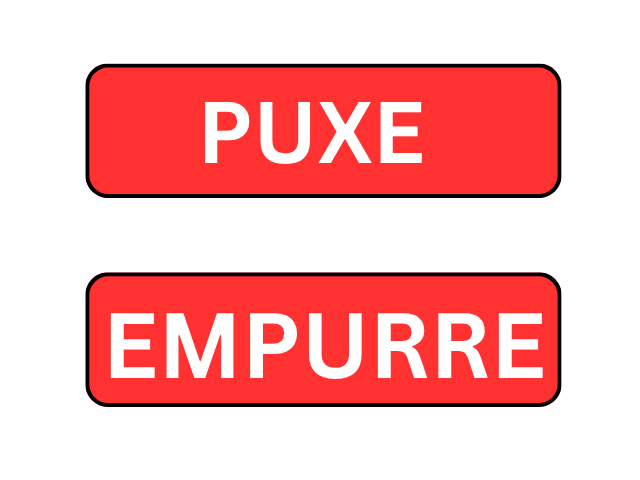
6. Puxe means pull
This one is pretty simple and goes along with the language, but if you see puxe on a door, it means pull. It sounds like push, but I have looked like an idiot many times when trying to push a door open. Push is “empurre”
7. Be aware of cultural and social differences
This is kind of a big one. There are many reasons people are moving to Portugal, especially from the US, but it’s important to understand the impact it is having on the local population. Portugal is seeing a huge increase in immigration, and it is causing problems. Only 1.3% of them are actually American, but we are still causing a bit of an impact, and it can be upsetting to the locals.
Property prices have risen significantly, even in the few years I have been here. Additionally, everything has gotten more expensive, and it is making it hard for locals to get by. Wages here are much lower than in other European countries, and even lower than in America. So even though we come here and see that things are more affordable than back home, be careful with how you express that. If you say “wow, that’s so cheap!” it can be incredibly offensive because, to Portuguese locals, it’s not cheap. It might actually be something they can’t even afford. Be aware and sensitive to what the local culture experiences, not just your experience of it.
Attitudes toward immigrants here have become a bit negative, so speaking Portuguese goes a long way. If you show you are trying to assimilate, you will have a much easier time, even if your Portuguese is really bad! I have literally had people go from almost yelling at me when I ask if they speak English (in Portuguese) to being pleasant and helpful when I try to say what I need in the language.
8. Learn to slow down
Living in Europe can be drastically different than in America, and one of the most obvious differences is the pace of life. In America, I was ALWAYS in a hurry. I rushed to work, rushed to eat, rushed to run errands, and rushed to appointments. Everything was always on a tight schedule. Here, it’s not like that. You go to a restaurant and enjoy your meal without the server constantly “checking in” and waiting to get you out the door so they can get the next tip. Here, it’s the opposite. You can be at a restaurant for a couple of hours, and no one bats an eye. You can eat slowly and enjoy the company. And you have to actually ask for your check when you are ready to go, and even then it might take a while. Everything in Portugal seems to run at a slower pace. It can be hard to get used to, but I think it helps with my overall stress.
The slower pace shows up in opening hours too. Many smaller shops close for a long lunch, close early on Saturdays, and are closed on Sundays and Mondays. Bigger supermarkets and shopping centers usually stay open, but if you need something from a little local shop, plan ahead. Do not make my mistake of showing up at 1 pm to run errands. The shop is not closed forever; it’s just taking a very reasonable break. This is also good to know when planning trips. A weekend trip to a different town can easily end with you walking around on a Sunday and finding everything closed. This has happened to me many times; I still forget.
9. Get used to the metric system
As Americans, we don’t really do the metric system, but here, it’s all metric. From buying groceries and measuring things to the temperature, it’s a lot easier if you know the metric system. I actually brought my American measuring cups, both liquid and solid, so I can still follow recipes without converting. But everything at the store is in ml or l.
Also, things like beds aren’t measured the same. There aren’t twin, queen, or king; there are 90×180 cm and 180x200cm and everything in between. Sheets are also labeled by these measurements. It is a bit difficult to figure out at first. I fully had a meltdown trying to get sheets a few weeks after I got here, which leads me to my last point.
10. You will have a meltdown
Everyone I know who has moved here has had a meltdown. It usually happens in the first few months. Someone told me that it takes a good 6 months to feel at home somewhere and that I would probably break down somewhere in the middle of that, and it definitely happened. As I just said, I was triggered by trying to buy sheets, but everyone’s meltdown has a different trigger.
Moving to a new country is hard, and things are so different. It can be very overwhelming! When you are trying to settle in and adjust, everything is in a language you don’t understand, and all your friends and family are so far away; it can be a lot. Everything builds up, and one day you just kind of break down. Mine was because we were walking everywhere, trying to find sheets for our bed. We had already had many challenges, and I was feeling really tired and sick from all my long covid stuff. All I wanted was to get in my car, drive to Target, and buy some soft sheets in a language and size I understood. I’m happy to report that the next morning I ordered some nice, soft sheets from Amazon, and everything felt better.
Is Moving to Portugal Worth It? My Honest Take
So yeah, there are probably many more things I wish I had known before moving here, but honestly, I have adjusted so well that I’ve forgotten them. Making this list actually took me some time because, after a while, it was just my normal life. Like, yeah, there were challenges, but life always has challenges. And honestly, that’s part of the adventure. Living in Portugal has been worth it, and I don’t have any regrets. Sure, these would have made my life easier, which is why I’m sharing to help you!
Ask Me Anything (Yes, Even the Embarrassing Stuff)
Do you have any questions about living here? Are you getting ready to move across the ocean and want some extra advice? Schedule a call with me, and I can answer your questions. Click here to schedule!

Follow Me
To see more about what my life is like living in Portugal, check out my socials💙
- Insta @vegas.to.portugal
- TikTok @expat.in.portugal
Read More
For more about the moving and visa process, check out these posts here